




It’s funny what one person will find intimidating when it comes to menu planning and cooking. Normally, I think I have a pretty good handle on it, but as I start my 6-week maternity leave, I realize that now I’m responsible for lunches too! That’s something that my babysitter normally handles. It isn’t completely foreign to me as I love to use leftovers for lunches, but it is a change to my normal routine. Make sure you check out your local grocery sale ads so that you can make a smart menu plan!
How to Make a Quiche
Here’s a recipe for quiche that can not be easier. Or more versatile. I call it my “Choose Your Own Adventure” quiche because you can choose what goes into it. I’ve written the ingredients list to be intentionally vague. Want to do a ham & broccoli quiche? Great! Want to do an Italian sausage and green pepper quiche? Awesome! Want to do a chicken and asparagus quiche? Tasty! You can use whatever meats, veggies, and cheeses that you want (or that you have on hand)! I did a ham and broccoli quiche earlier this week, using leftover ham from Easter dinner (this is a great recipe to use up leftovers.) I used a combination of Swiss and cheddar cheeses and it was fabulous!
On the eggs, meats & veggies, I put a range of sizes. If you’re using a standard 9-inch pie pan, go with the lower end. But if you have a bigger 10-inch pie pan, go with the upper end – you want the quiche nice and full!
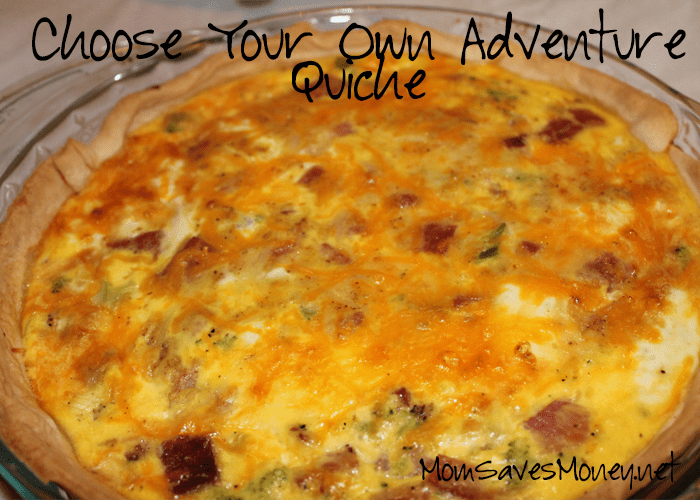
Enjoy this quiche as breakfast or dinner! We prefer to eat this as a dinner with frozen fruit cups for a dessert. The quiche will be delicious whenever you choose to indulge!

Choose Your Own Adventure Quiche
Ingredients
- 9- inch pie crust
- 4-5 beaten eggs
- 1 cup milk
- 1/2 tsp salt
- 1/4 tsp pepper
- 1/2 tsp mustard (optional – depends on what type of meat you’re using – great with ham!)
- 1 cup cheese
- 2-3 cups of fillings (any combination of cooked veggies or meats)
Instructions
- Preheat oven to 350 degrees.
- Cook the meat & veggies however you like.
- In the pie pan, spread out your pie crust.
- Spread a little bit of the cheese on the bottom of the crust.
- Put the meat and veggies on top of the cheese.
- In a bowl, beat the eggs. Add the milk, salt, pepper, mustard and the rest of the cheese. Mix.
- Pour it all on top of the meat and veggies.
- Bake for 45 minutes.
- Let reset of 10-15 minutes before slicing. This reheats super well too.
Jayme is a wife to 1 and a mother to four little boys. She tries to coupon, builds a smart stockpile, and always meal plans. While she likes to cook, she’s in the stage of life where simple is usually better – she never knows how many hands she’ll have free at dinner time! You can find her at No Regrets Living.
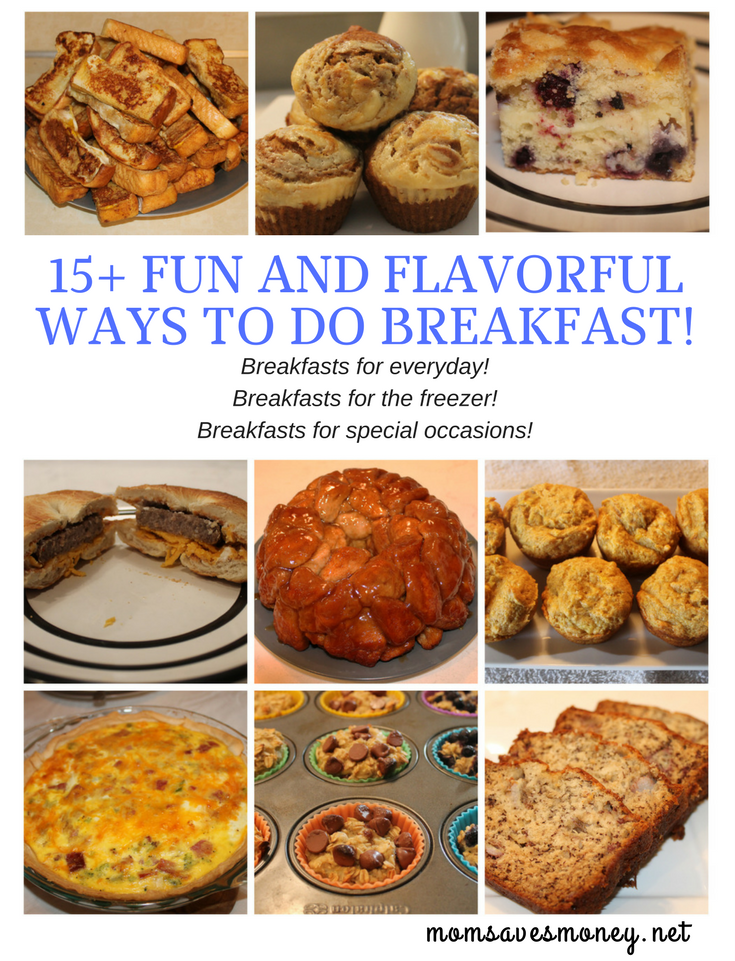
Like this? Also try these easy breakfasts:

I’m going to try this with almond milk & parmesan cheese. Im lactose intolerant so hopefully that mix will work for me. We’ll see…
Planning lunches during a six-week leave can make even familiar cooking decisions feel unexpectedly demanding. A choose-your-own-adventure quiche format helps by turning leftovers, vegetables, cheese, and protein into flexible components instead of separate meal plans. A short list of compatible fillings and a reminder to cool and portion leftovers could make the recipe even more useful for several easy lunches.
The “choose your own adventure” framing is a helpful reminder that flexible meals can reduce the pressure of planning, especially when lunch suddenly becomes part of the daily routine. A quiche format makes that flexibility easy to see: the basic structure stays familiar while fillings can shift according to what is available. That makes the recipe feel less like a fixed rule and more like a practical decision framework.
Menu planning often becomes harder when a routine changes, even for someone who usually feels confident in the kitchen. Taking on lunches during maternity leave adds a new daily decision rather than simply another recipe to prepare. A flexible quiche format seems well suited to that situation because ingredients can be adjusted to what is already available. It turns an intimidating planning task into a manageable meal with room for preference and leftovers.
The shift from planning dinners to also covering lunches can make a familiar routine feel unexpectedly complicated. A flexible recipe like a quiche helps because it can absorb small amounts of vegetables, cheese, or leftovers without requiring a completely separate plan. Preparing one ahead also leaves room for individual portions later, which is useful when daytime schedules and household responsibilities are changing.
The choose-your-own-adventure format is a practical answer to the pressure of planning lunches during a major routine change. A flexible quiche lets the cook begin with a dependable structure while adapting fillings to what is available, which can reduce both decision fatigue and unused ingredients. It could be even more helpful to group the options by texture or moisture level, since watery vegetables, rich cheeses, and cooked meats affect the final result differently. That would preserve the approachable idea while making substitutions easier.
The shift from planning only dinner to covering lunches as well is a real reminder that meal routines often depend on invisible help. A flexible quiche is useful because it can absorb leftover vegetables, cheese, or protein without requiring a separate recipe for every variation. Keeping a short list of reliable fillings can also make weekday planning feel less daunting. Even simple labels or letters on a family menu can make the plan easier to scan.
A choose-your-own-adventure quiche is a useful answer to the pressure of planning more meals at home. Instead of treating lunch as another fixed recipe to master, the format can turn available vegetables, cheese, and leftovers into a flexible decision. A few simple guidelines on fillings, seasoning, and baking time would make the recipe easier to adapt while still helping cooks avoid a soggy or uneven result.
The shift in responsibility during maternity leave makes the lunch question feel much more immediate than an ordinary meal-planning problem. A choose-your-own-adventure quiche seems well suited to that moment because it can turn leftover ingredients into a flexible meal without requiring a separate plan for every day. Including a few decision points—base, filling, and make-ahead storage—could make the recipe especially reassuring for cooks facing changing schedules.
Taking responsibility for lunches as well as the usual meal planning can make even familiar cooking feel unexpectedly demanding. A choose-your-own-adventure quiche approach helps because it turns leftovers and available ingredients into a flexible framework rather than another fixed recipe to solve. It may also help to decide the filling in advance, then use a short interval for prep so the lunch task has a clear endpoint before the rest of the day begins.
A flexible recipe is especially helpful when meal planning suddenly includes more lunches and less predictable time. The useful part of a choose-your-own-adventure approach is having a dependable base while swapping ingredients according to what is available. Keeping a few filling combinations written down can reduce decision fatigue and make quiche feel like an adaptable weekday meal rather than a special occasion dish.
Taking on lunches as well as the usual meals can quietly change the whole rhythm of a day, especially during a major transition like maternity leave. The choose-your-own-adventure idea makes the task feel more flexible: one basic quiche can accommodate whatever ingredients are available rather than requiring a separate menu for every meal. That kind of planning can make unfamiliar responsibilities seem more manageable without pretending they are effortless.
Taking on an extra daily meal during maternity leave can make menu planning feel much more demanding, especially when that task was normally covered by someone else. A flexible quiche format seems well suited to this kind of transition because it can use what is already available and does not require a fixed plan for every filling. Keeping lunches adaptable may reduce the pressure of deciding what to make each day.
Taking over lunches during maternity leave shows how a routine can suddenly feel unfamiliar when one hidden responsibility shifts. A flexible quiche is especially practical here because the filling can adapt to whatever is available, while leftovers can cover another meal. It also turns planning into a smaller decision: choose a few compatible ingredients instead of inventing a completely new lunch each day. Keeping two or three easy filling combinations in mind could reduce the mental load without making every meal repetitive.